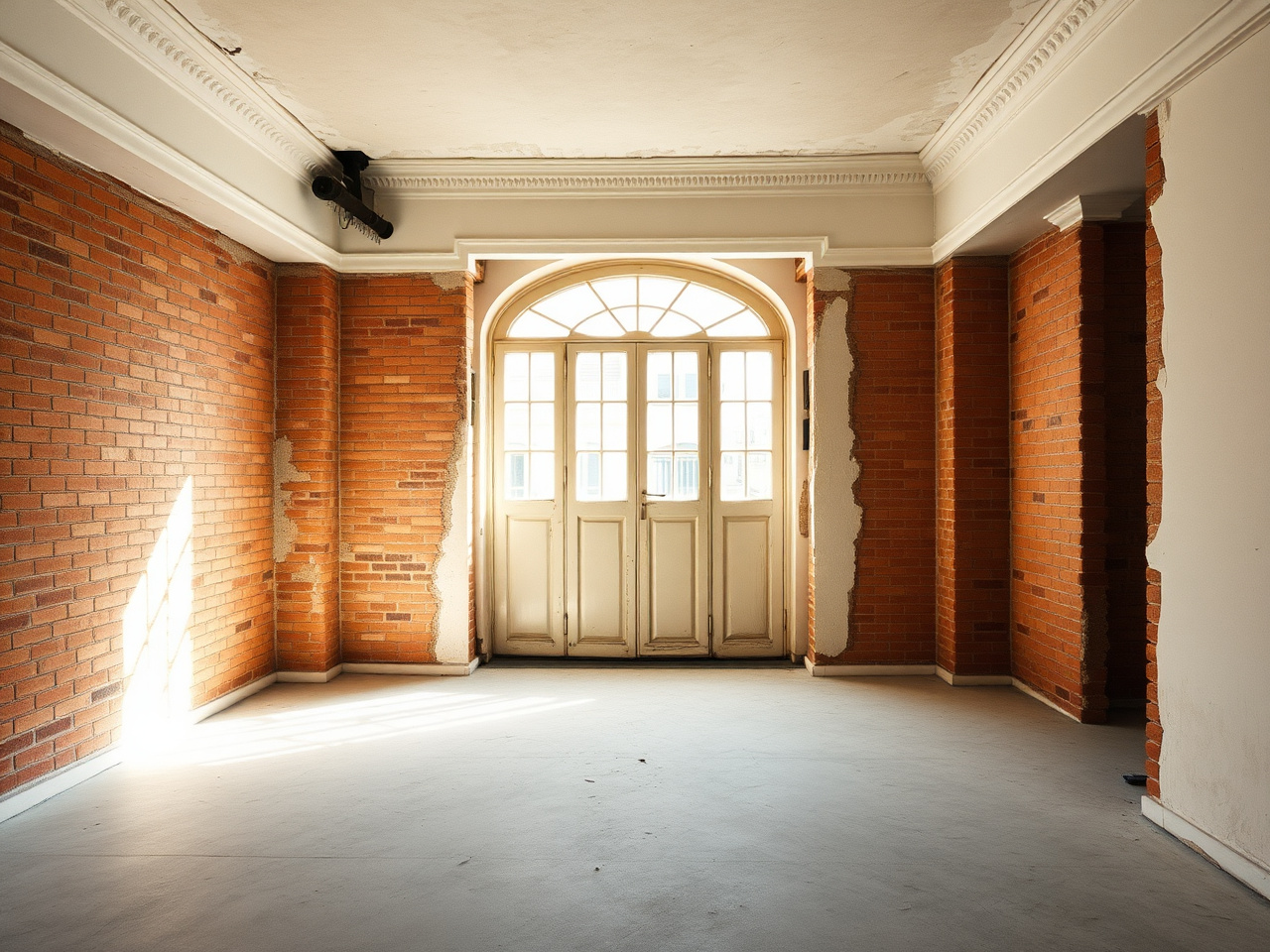
1. Touching a load-bearing wall without calculation
The costliest one. In pre-1940 buildings many internal walls are load-bearing and the floor rests on Catalan vaulting. Opening a gap without redistributing the load with a calculated lintel or beam causes cracks — in your flat and the neighbour's. Before demolishing anything, an inspection defines what is a partition and what is structure. It's the basis of any apartment renovation that changes the layout.
2. Starting without the right permit
Renovating without the correct procedure risks fines, a stop-work order and being unable to legalise it afterwards. Each renovation has its permit — minor-works notice, responsible declaration or major works. Knowing which you need before starting avoids the worst surprise. The Spanish guide to building permits in Barcelona covers each case.
3. Accepting an open-ended quote
An indicative quote commits no one: the price climbs with "extras" during the works. Demand a closed, line-by-line quote with units and unit prices. The figure signed in the contract should be the final one, unless you request changes in writing. That's how a serious turnkey renovation works.
4. Not checking the old installations
In flats with pre-code wiring or lead/iron plumbing, renovating only "what you can see" is throwing money away. If the cabling and pipes aren't renewed during the works, the problems come back soon and force you to open freshly finished walls.
5. Underestimating drains and damp
Old buildings have cast-iron drain stacks with decades of use, plus damp from capillarity or leaks. Renovating a bathroom without checking the communal stack is the number-one cause of stains that keep reappearing on the neighbour's ceiling. Waterproofing and stack condition are checked before, not after.
6. Not coordinating the trades
When the client hires electrician, plumber and builder separately, each blames the other for delays and no one owns the result. A single site manager coordinating every trade removes the dead time and leaves one point of contact for any problem.
7. Choosing on lowest price alone
An abnormally low price almost always hides something: excluded items, lower-grade materials, unlicensed trades or no warranty. Compare closed quotes with the same scope — not loose prices — and check licences, references and a written warranty.
8. Not allowing realistic timelines
A full renovation of 70-90 m² takes 8-14 weeks; with structure and a major-works licence, add the permit time. Promising very short timelines usually means missing items or badly overlapped work. Allow a 10-15% buffer, especially in old buildings where surprises appear once walls are opened.
9. Materials wrong for the use
Choosing finishes for looks without thinking about real use is a mistake you pay for over time: floors that scratch, joints that stain, paint that won't survive Mediterranean humidity. In a major renovation the right material for each area lasts years; the cheap one, months.
10. Not demanding a completion certificate or warranty
Without a completion certificate you can't obtain the habitability certificate or legalise the renovation. And without a written warranty, any later defect is your problem. Always demand a workmanship warranty (24 months minimum) and, on structural work, the 10-year LOE cover.